Types of Decking Material: Wood, Thermo Wood and Composite

Hardwood boards, thermo wood and composite boards compared: how each is laid, what care it needs and where it falls short.
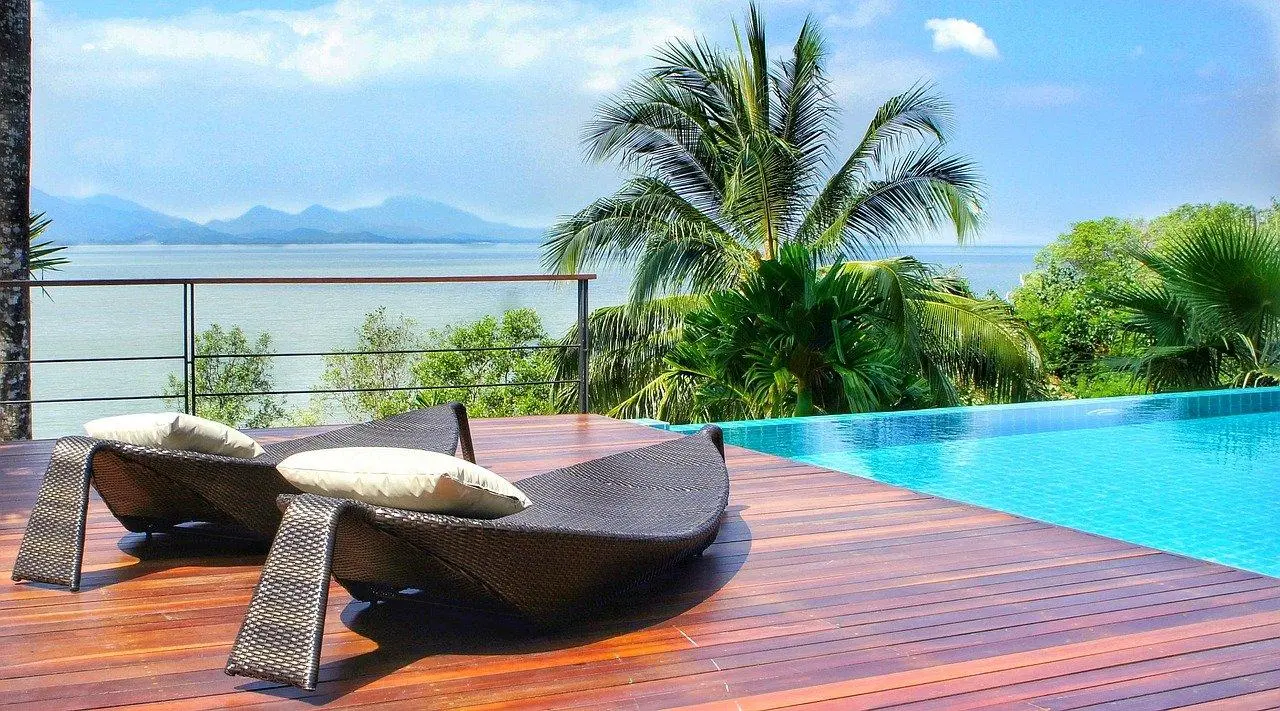
You want a terrace by the pool, or a place to eat dinner with your family under the tree every evening. Before you choose a table and chairs, choose the deck floor. The types of decking material differ most in what they need underneath and in how much care they ask for afterwards.
Some decking can lie on the ground. Other decking needs a solid concrete base. So choose the floor early, before the slab is poured and the slope layer is made. Then the deck comes out level, the work goes to plan, and you can make the terrace larger later.
This guide compares three materials:
- wooden boards;
- thermo wood;
- composite boards.
Wooden boards: warm underfoot, with yearly care
What it is. Boards of solid wood. Picture a hardwood deck with a hot tub and planters along the edge. In summer you sit on the boards next to the flower bed, in the sun during the day and by a fire in the evening.
Why it works. Wood is warm and pleasant to the touch, and it does not get hot in hot weather. It continues the garden around it. Add a dining table, a screen and a warm throw, and the terrace becomes as comfortable as a living room.
The trade-off. A wooden terrace or rooftop deck takes time and work. Clean it and oil it again at least once a year. The oil protects the wood from losing colour and from wear. Without this care, the deck does not stay good-looking for many years.
What type of wood for deck boards should you choose?
Choose a hard wood. Exotic woods such as Merbau, Bangkirai and Masaranduba work well, and so do Siberian and European larch. Pine and spruce do not suit a deck: they are too soft for foot traffic and damage easily.
Two ways to build a wooden deck
- On a concrete base. The joists sit on concrete, and the boards are screwed to the joists. You can also fix the base to the ground. This deck is stable and strong.
- On the ground. This way is faster and cheaper, but the deck lasts less.
With either method, put special washers or brackets between the beams and the concrete. They keep the wood off the concrete and hold the parts together.
Common mistake: wood that touches concrete directly. It absorbs moisture and starts to rot. Leave a 5 mm gap between the boards too, so the wood can expand and shrink freely.
Give the job to specialists who have the right tools and know how wood behaves.
Thermo wood decking: what does the heat change?
Heat makes local wood stable and resistant to rot. It also makes the wood brittle and quick to fade in the sun.
What it is. An alternative to both ordinary wood and composite. Thermo wood is local wood, often pine or ash, treated with high temperature and steam. The process uses no chemicals, so the material stays natural and safe for health.
Why it works. The treatment makes the wood darker and changes its properties: the sugars in its structure crystallise. After treatment, the boards keep their size and shape, resist mould and fungi, and do not rot. They need no protective coating.
The trade-off. Thermo wood reacts to UV light and loses its first colour quickly. This is why many owners still oil it. It is less work than with ordinary wood: you oil only the top surface, not the sides of the boards.
Common mistake: cutting and fixing thermo wood like ordinary wood. The heat treatment makes it brittle, and the boards crack. Use the screws or nails that the manufacturer recommends, and drill holes before you fix them.
Apart from that, you lay thermo wood the same way as larch or exotic hardwood.
Composite vs wood decking: which needs less care?
Composite needs less care than wood, but it still needs some.
What it is. A material for people who want a wooden terrace but not the upkeep. Composite boards are made of wood flour, synthetic materials and additives. They look like wood but avoid most of its weak points.
Why it works. Composite boards do not swell or peel. They resist bad weather, bacteria, fungi and insects. They do scratch and wear over time. You can remove most of this damage with a wire brush or sandpaper: sand the surface gently along the grooves.
The trade-off. Composite boards get hot on hot days. Think twice if your terrace has no roof and faces south or south-west.
In theory, composite needs no impregnation and no care at all. In practice, UV light makes the boards lighter over time, and a greasy spill can leave a permanent mark. To bring back the colour and protect the surface, use a special impregnation or a restorer made for composite decking.
Which deck flooring options suit your terrace?
The one you are ready to look after, and the one that copes with the sun on your terrace. This table puts the three side by side.
| What to check | Wooden boards | Thermo wood | Composite boards |
|---|---|---|---|
| Care | Clean and oil at least once a year | Oil the top surface to keep the colour | Impregnation or restorer when the colour fades |
| Weak point | Rots if it touches concrete | Brittle: drill every hole first | Gets hot in the sun |
| Suits | A deck you are ready to look after | Natural wood without the rot | Low upkeep under a roof or out of the south sun |
Before you buy, see the boards or tiles live: touch them and compare the materials. Their look and feel tell you whether a product is strong and how it will last over the years.
The look you can judge before the shop. Draw your terrace in Home Planner, measure the space and try the finishes you like on your own plan in 2D and 3D. Add furniture from well-known brands and make a realistic picture of the result. For the rooms inside, start from ready-made layouts for the bedroom, bathroom or living room. Then decide which boards to buy.
Try it on your own project
Free room planner and interior design app